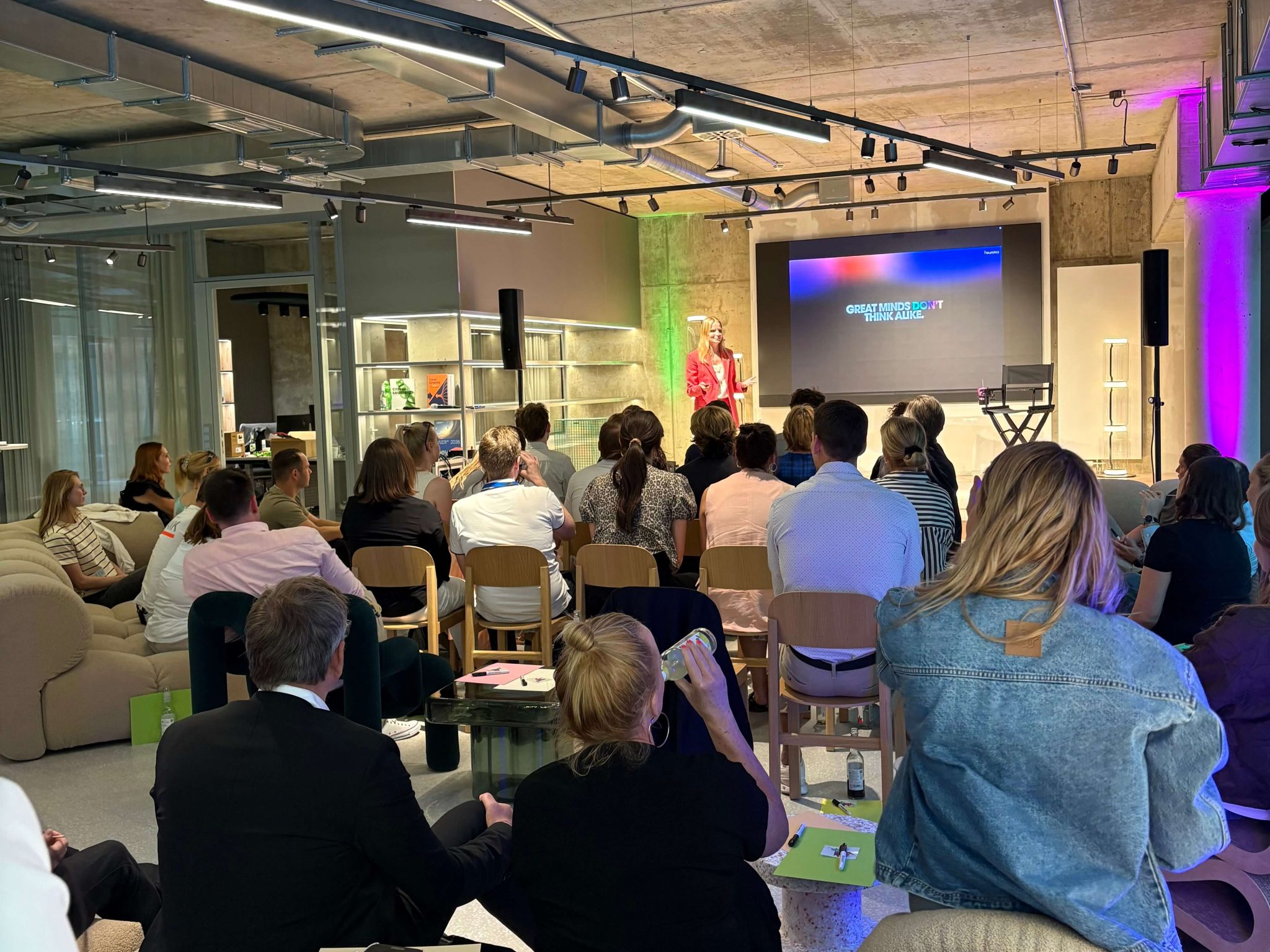
The future of a city is created where people come together, exchange ideas and take responsibility. Through initiatives such as the Zukunftsviertel Friedrichstadt, the EUREF Campus and Club Zukunft Düsseldorf, the city is demonstrating how urban transformation can succeed: through collaboration, openness to fresh thinking and the courage to actively shape the future.
Cities today face the complex challenge of advancing climate action, the energy transition, digitalisation and social inclusion simultaneously. Bringing together residents, businesses and public institutions in this process is a demanding task, not only for local authorities. Both established companies and innovative start-ups have a vital role to play in driving the continued evolution of vibrant, sustainable and forward-looking urban environments.
Shaping the Future Together
Neighbourhood management, start-up promotion and innovation development are not separate disciplines. On the contrary, they share significant common ground and reinforce one another. Together, they provide the foundation for the ongoing development of liveable, resilient and future-ready urban districts.
Start-ups and emerging businesses contribute cutting-edge technologies, fresh perspectives and the agility to turn ideas into action. When combined with the expertise, networks and resources of established organisations, they help create innovation ecosystems that not only stimulate economic activity but also generate tangible benefits for local communities.
Stadtwerke Düsseldorf has long evolved beyond the role of a traditional energy supplier. Today, it actively supports the city’s transformation and positions itself as a driving force behind both the energy and mobility transition. By creating platforms, networks and opportunities for collaboration, it enables innovative ideas to become practical projects. In this way, the future is not being shaped somewhere else. It is being shaped right here in Düsseldorf.
Future Makers – Made in Düsseldorf
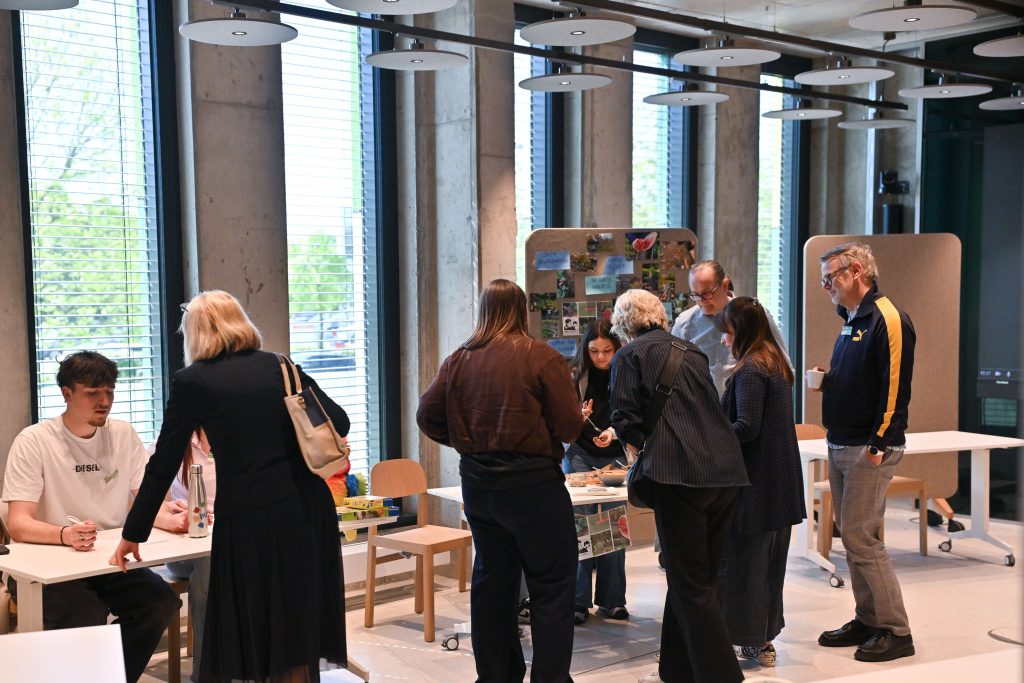
Working alongside partners from business, academia, public administration and civil society, solutions are being developed that reach far beyond conventional infrastructure projects. The Zukunftsviertel Friedrichstadt serves as a compelling example of how neighbourhood management can become a catalyst for innovation. The initiative is founded on the principle of viewing entire neighbourhoods as interconnected systems and developing solutions for the city of tomorrow through collaborative action.
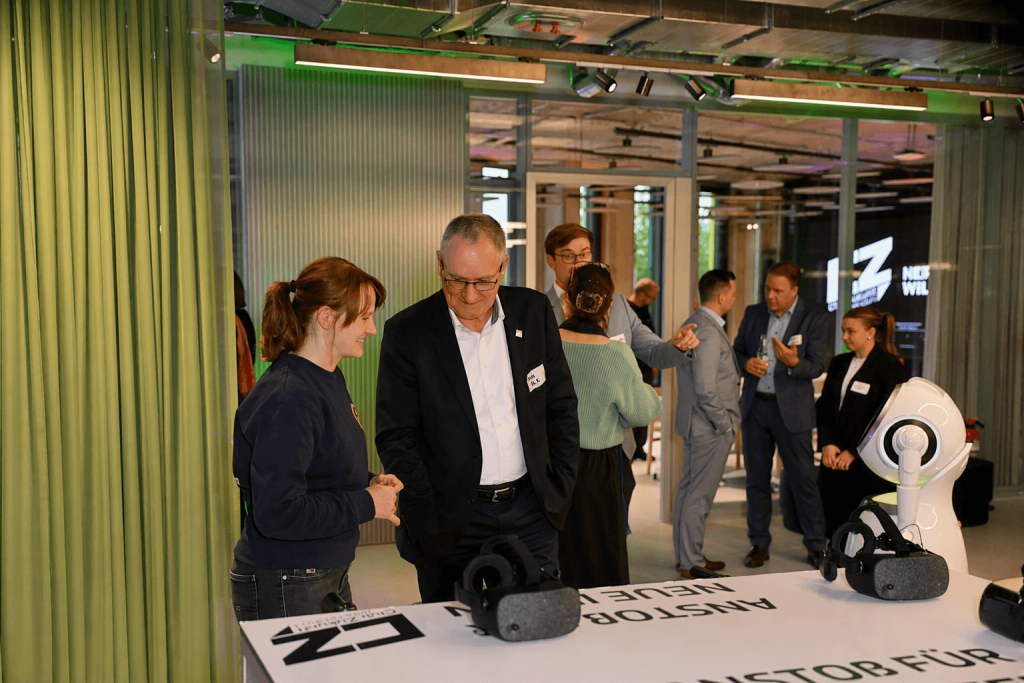
On 8 September, Stadtwerke Düsseldorf and its partners will welcome participants to Club Zukunft Düsseldorf, the innovation hub located at the EUREF Campus. Club Zukunft serves as a platform for dialogue, cooperation and the development of innovative ideas relating to energy, mobility, business, sustainability and urban development. It creates opportunities for new perspectives, meaningful exchange and collaborative problem-solving. Its ambition is to share knowledge, build new partnerships and jointly develop solutions for the future of Düsseldorf.
Mini Hackathon: Real Neighbourhoods, Real Challenges
This approach lies at the heart of the Mini Hackathon taking place as part of Start-up Week Düsseldorf. The central question is straightforward yet highly relevant: how can an existing residential neighbourhood become more liveable, more climate-resilient and better connected? To explore this challenge, start-ups and young companies are invited to develop practical and scalable solutions for a fictional neighbourhood based on real-world urban challenges.
Participants will work with an anonymised neighbourhood in Düsseldorf that reflects many of the issues commonly encountered in urban environments. Housing, energy, mobility, green space, water management, climate adaptation and community life are closely intertwined. It is precisely within this complexity that innovative approaches can reveal what is possible within existing urban structures.
The selected neighbourhood is representative of many established residential areas across Düsseldorf. It comprises several apartment buildings surrounded by green and open spaces, with a small watercourse located nearby. As a result, questions relating to quality of life, urban heat, water management, heavy rainfall events and the use of public space become particularly tangible. At the same time, local amenities and public transport are readily accessible. This combination makes the neighbourhood especially relevant. It is not a greenfield development, but an existing residential area characterised by real everyday needs, limited space and diverse stakeholder interests.
Simpler, Greener, More Liveable
The Mini Hackathon focuses on a key challenge: how can energy, mobility, climate adaptation, water management and community engagement be integrated in ways that deliver tangible benefits for residents? Participants are encouraged to develop ideas that make neighbourhoods simpler, more sustainable and more enjoyable places to live. Potential areas of focus include:
- Energy in Buildings: solutions for shared energy generation and supply, greater transparency around energy consumption, or digital energy services.
- Local Mobility: shared mobility schemes, secure cycle parking, improved pedestrian routes, charging infrastructure, mobility hubs and stronger integration with public transport.
- Climate and Water: concepts addressing heavy rainfall resilience, urban greening, shading solutions and enhanced outdoor comfort during periods of extreme heat.
- Community and Participation: tools and services that support community engagement, civic participation, mutual assistance and the shared use of neighbourhood spaces.
Get Involved
The Mini Hackathon offers participants visibility as well as valuable opportunities to connect not only with fellow start-ups, but also with key stakeholders from business, urban development and the energy sector. Rather than working on an abstract or theoretical model, participants will engage with a realistic neighbourhood scenario that can be further developed through clever ideas and practical measures. This provides an opportunity to explore how innovative solutions and existing product portfolios can contribute to the sustainable development of urban communities.
Anyone with a passion for creativity, interdisciplinary discussion and collaboration is warmly invited to take part. It is an opportunity to exchange ideas, challenge assumptions and help shape the future of neighbourhoods in Düsseldorf and beyond. We look forward to welcoming the next generation of urban innovators.
Photo credits: Michael Lübke
GreenCity x Community: Practical Approaches to Neighborhoods
8 September 2026, 09:30–12:30, EUREF-Campus 1, 40472 Düsseldorf