Many legal mistakes related to intellectual property (IP) and contracts do not stem from a lack of knowledge, but rather from time pressure and a focus on day-to-day operations. They often go unnoticed at first and only come to light during critical phases of a company’s development—such as during a funding round, an expansion, product marketing, or even in the context of a company sale. The consequences can be significant: costly cease-and-desist letters, legal disputes, loss of important intellectual property rights, or, in the worst case, jeopardizing the entire business model.
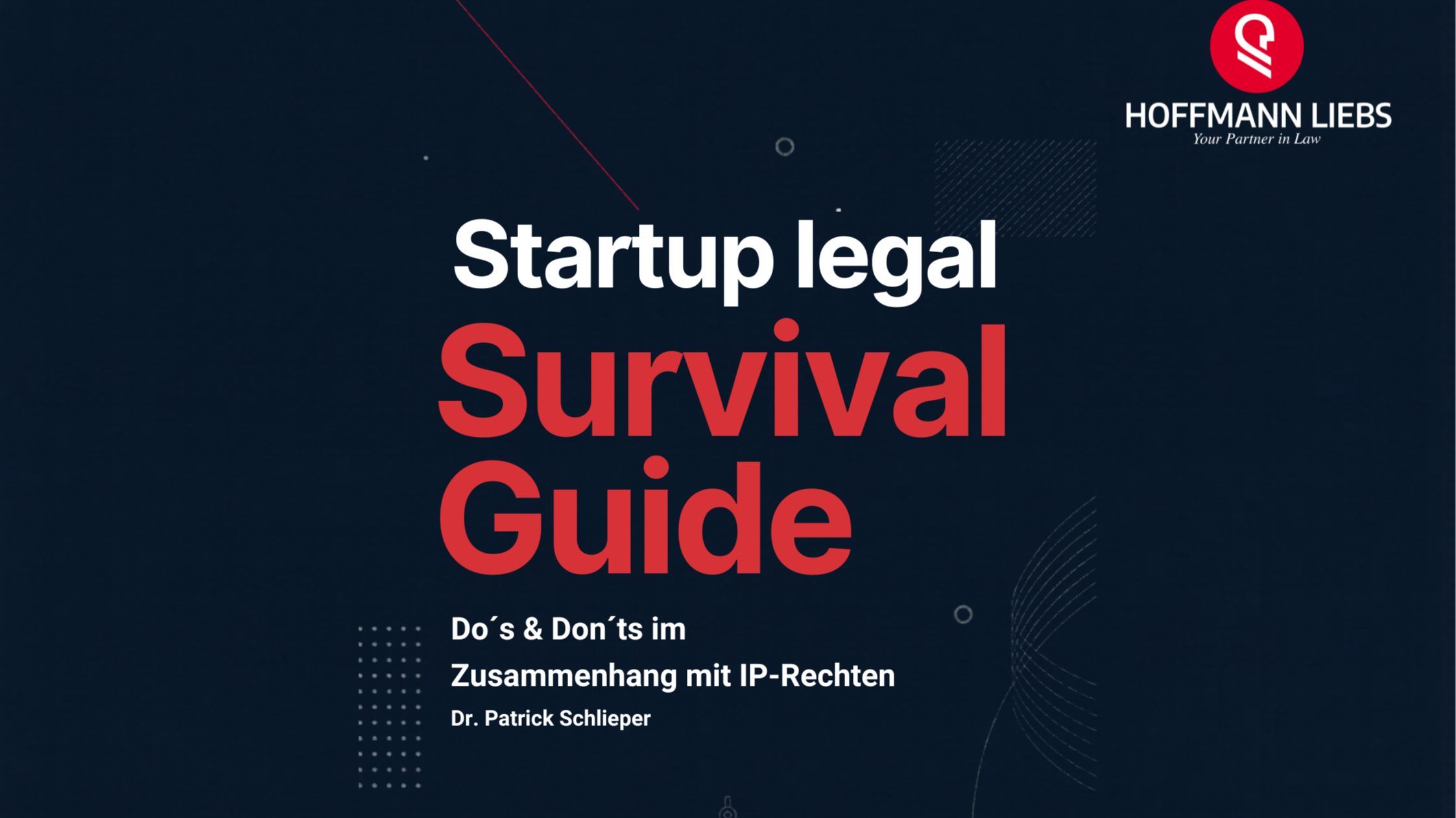
The event “Start-Up Legal Survival Guide: Do’s & Don’ts Regarding IP Rights” uses practical examples to illustrate the mistakes founders most commonly make and how to avoid them.
A key focus is on trademark and naming rights. Many startups invest considerable resources in building their brand without first checking whether the chosen company or product name is legally usable at all. Participants will learn about the risks involved, what an effective trademark strategy looks like, and what measures make sense to take as early as the founding phase.
In addition, the event will examine the legal challenges associated with the use of artificial intelligence. Topics will include the use of AI-generated content, copyright issues, and liability and risk considerations related to images, text, data, and software.
Another key focus is on license agreements and the contractual protection of IP rights. Particularly in the context of collaborations, the use of software, working with freelancers, or the commercialization of in-house developments, provisions are often overlooked that can later have significant economic consequences.
The event takes on a particularly practical focus through concrete case studies drawn from real-world consulting practice. Using typical mistakes in contract drafting, rights transfers, trademark applications, or when dealing with cease-and-desist letters, risks are clearly illustrated and potential solutions are presented.
The event is aimed at founders, startups, and young companies that wish to build their growth on a legally sound foundation. The goal is to raise awareness of typical pitfalls, identify risks early on, and avoid legal problems before they become a serious burden for the company.