Artificial intelligence is transforming the way we work. It writes copy, analyses data, organises information and automates an increasing number of everyday tasks. At the same time, digital platforms allow teams to collaborate from almost anywhere. For startups, growing businesses and established companies, this raises an important question: What is the purpose of an office when so much work can be done remotely or supported by AI?
During Düsseldorf Startup Week, the AREO Treibhaus at Graf-Adolf-Straße 41 invites visitors to explore how the role of the workplace is changing. Throughout the week, guests can discover modern office concepts, experience new working environments and discuss what physical workplaces need to offer in the future.
The highlight of the programme will be Linda Wienkamp’s keynote on Wednesday evening: ‘Why Do We Still Need an Office When AI Can Do Everything?’
A Place to Work, Create and Grow
AREO Treibhaus brings together flexible office space, coworking facilities and a professional podcast studio in a central Düsseldorf location. It is designed for companies, independent professionals and teams looking for a place that can adapt as their business develops. The spaces range from compact offices for a first permanent base to larger premises for established teams entering their next phase of growth.
The coworking area offers a professional alternative to working from home, while the podcast studio allows businesses, creatives and entrepreneurs to produce high-quality content.
As a company evolves, its workplace needs to evolve with it.
From a Place of Work to a Place of Connection
When employees can complete many tasks from almost anywhere, the office is no longer an automatic necessity. But that does not mean it has become irrelevant. Its purpose is simply changing. Instead of being a place where people come only to sit at a desk, the modern office needs to support interaction, collaboration and a shared company culture.
This shift can be experienced throughout Startup Week. Furniture and workspace concepts demonstrate how areas for focused work, creative thinking and personal conversation can exist side by side.
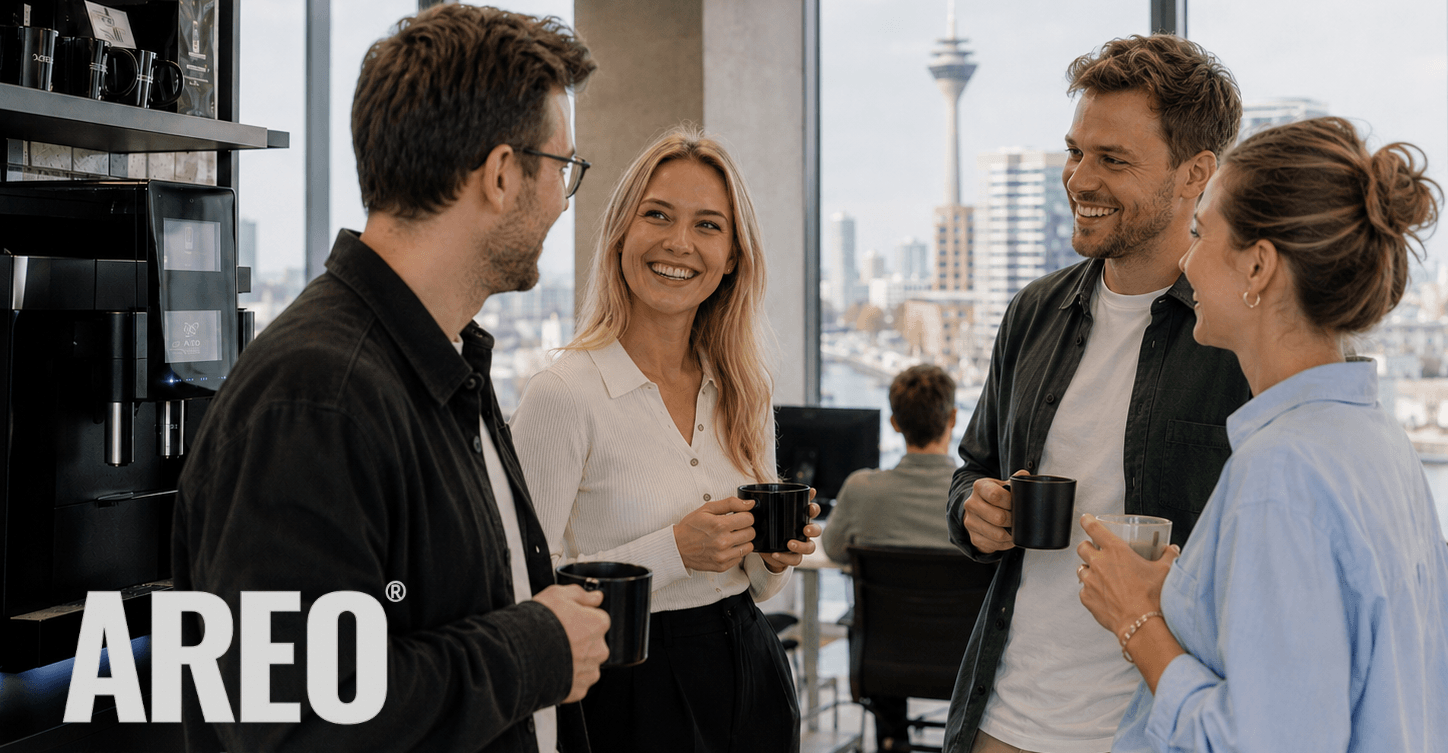
Human connection is central to the programme, just as it should be in everyday working life. A barista will serve freshly made coffee, while the different spaces provide an informal setting for conversations, new contacts and the exchange of ideas.
The office of the future is not somewhere people have to be. It is somewhere they choose to be.
People do not come together simply to complete tasks. They exchange knowledge, develop ideas, make decisions and build trust. These spontaneous moments are difficult to recreate in a video call.
Linda Wienkamp Creates Workplaces Around People
Linda Wienkamp is the founder and owner of KONZEPTBUDE and an expert in workplace strategy and design across Germany, Austria and Switzerland. Since 2011, she has developed and implemented office concepts that translate working processes into physical environments and support long-term business goals.
She founded KONZEPTBUDE in 2023 to create holistic, future-ready workplaces. Her approach does not begin with furniture, floor plans or design trends. It begins with the people who will use the space.
Employees are actively involved in the planning process, helping to create tailored environments that are accepted and used by the people they are designed for. The result is not simply a visually appealing office, but a workplace that supports collaboration and makes company culture tangible.
The future does not simply happen. It is shaped.
Wienkamp combines functional planning with strategic thinking. She is a certified Quality Office Consultant, a speaker at the Mensch und Büro Akademie and the co-author of a trend report on the future of work.
AI Can Improve Processes, but It Cannot Build Culture
In her keynote, Linda Wienkamp will explore the role physical workplaces can play in an increasingly digital world. Her central argument is clear: AI can speed up processes, analyse information and take over operational tasks. But it cannot create trust, belonging or a shared sense of identity.
Efficiency can be automated. Belonging cannot.
Remote work can be highly effective from an organisational perspective. However, it does not automatically create strong relationships or a common understanding of how a company works. This is particularly important for growing teams. New employees need more than access to digital tools and clear processes. They also need to understand how decisions are made, which values shape the organisation and what it feels like to be part of the team.
Physical workplaces can provide the setting for these experiences. They give company culture a visible form and create opportunities for interaction that cannot be fully replicated online.
Give People a Reason to Come In
The answer is not to force employees back into the office. Attendance alone does not lead to creativity, connection or productive collaboration.
People do not come in for the desk. They come in for the people.
A modern workplace must offer something that working from home cannot provide in the same way. That includes spaces for exchange, concentration and collaboration, as well as a culture built on openness, participation and trust.
Linda Wienkamp’s work shows why workplace design, organisational processes and company culture must be considered together. Attractive furniture is not enough. Leadership, communication and daily working practices must also support the purpose of the space. Only then can an office become a place where people want to meet, contribute and spend meaningful time together.
Culture as a Competitive Advantage
AI tools are becoming widely available. Competitors can use the same software, automate similar processes and achieve comparable efficiency gains. A strong company culture is much harder to reproduce.
Technology can be copied. Culture cannot.
For startups, scale-ups and established companies, the way people work together is therefore becoming a strategic advantage. Businesses that align their spaces, processes and culture can share knowledge more effectively, strengthen team loyalty and create better conditions for innovation.
The Startup Week programme is aimed at founders, managing directors, investors and decision-makers, as well as professionals working in People & Culture, New Work, workplace strategy and business development.
The real question is not whether companies still need an office in the age of AI. It is whether they can create a place where something happens that technology cannot replace: human connection, trust and a shared culture.
Why Do We Still Need an Office When AI Can Do Everything?
9 September 2026, 10:00–12:00, Graf-Adolf-Straße 41, 40210 Düsseldorf